

Tropical Storm Rachel gave Las Vegas its wettest day in a year, with flooded roads near the Strip and I-15 closed for a time. A lot of people asked me in the car whether all that rain helped Lake Mead. The short answer: barely. The lake rose about an inch.
Key Takeaways
- The storm added about 0.1 foot. The Bureau of Reclamation recorded Lake Mead at 1,037.6 feet on Oct. 8 and 1,037.7 feet on Oct. 10 and 11.
- The lake is only about 26% full and near the lowest level since it first filled in the 1930s.
- The bigger story is the fight over Colorado River water. Nevada sued the federal government in August over new rules that could cut Southern Nevada’s share by more than 70% in a worst case.
Why All That Rain Barely Helped
Almost all of Lake Mead’s water comes from the Colorado River, which starts as snow in the Rocky Mountains of Colorado, Wyoming, Utah and New Mexico, then flows through Lake Powell before it reaches Las Vegas. Rain on the Las Vegas Valley mostly runs into washes, the Las Vegas Wash and local streets. The lake gets only small inflows from places like the Virgin River.
Utah State University’s Jack Schmidt told KSNV that storms like this help conditions but are only a temporary fix. Refilling the reservoirs depends on a big winter snowpack, and last winter’s was a record low. Colorado State University estimated in March that the Rockies snowpack was 38% of average. Schmidt called several strong wet years in a row a “tough bet.”
How Low Is It?
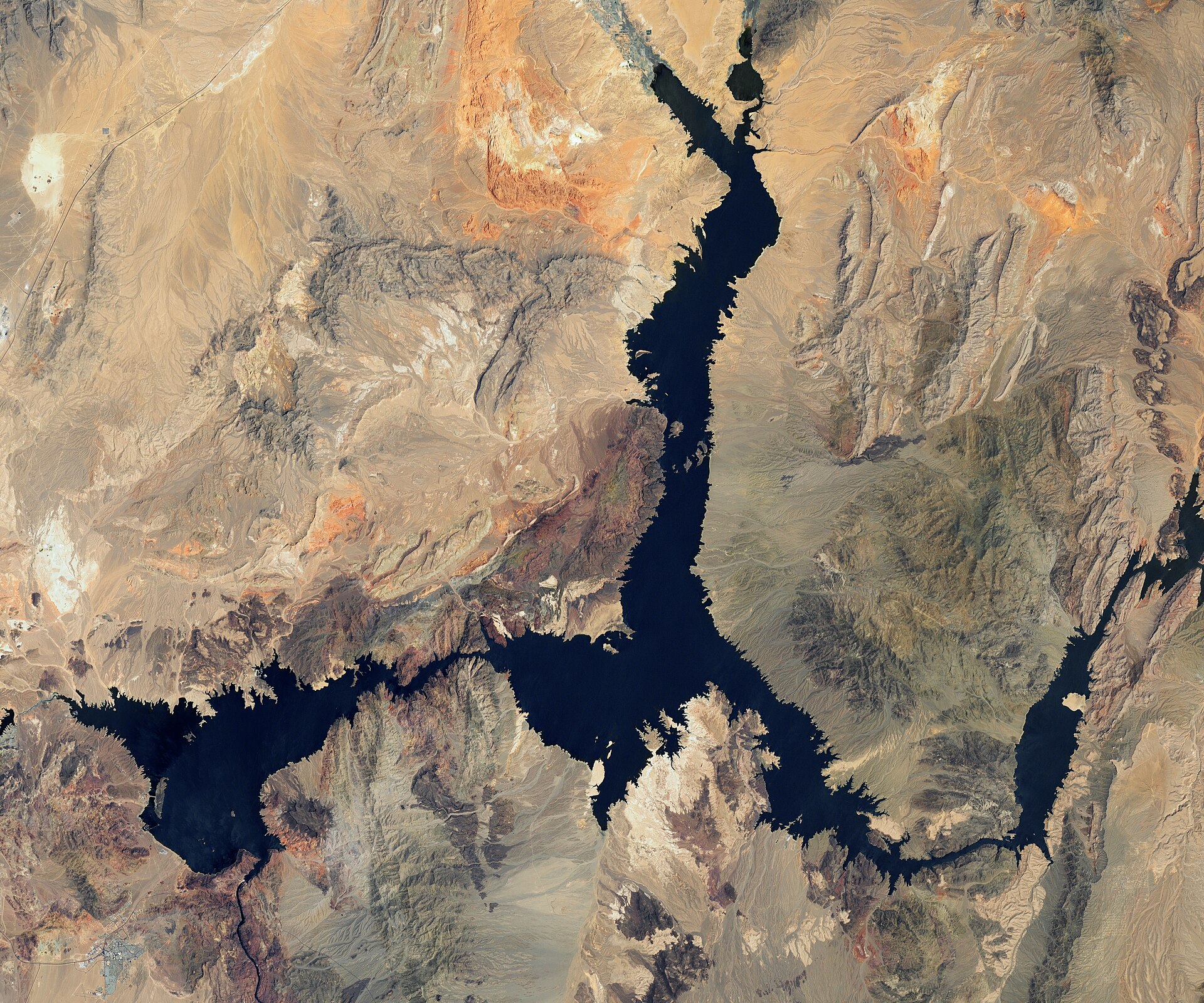
Lake Mead fell to 1,040.5 feet on Aug. 7, the lowest since 2022, and kept dropping. Combined storage in Lake Mead and Lake Powell is the lowest since Powell began filling in 1963, according to the Bureau of Reclamation. Lake Powell was about 22% full at the end of August.
The level matters for power as well as water. At about 1,035 feet, Reclamation expects Hoover Dam’s older turbines to risk serious damage. That’s less than three feet below where the lake sits now. Projections show Hoover’s generating capacity dropping sharply into 2027.


What It Means for Las Vegas
Your tap water is safe for now. The Southern Nevada Water Authority built a deeper “third straw” intake that can draw water even at very low lake levels, and the valley recycles most of the water used indoors. SNWA says Southern Nevada cut its Colorado River use by about 40% over 25 years while adding more than 800,000 residents. “Conservation has its limits,” SNWA general manager John Entsminger said.
The real risk is policy. Nevada’s share of the Colorado River is 300,000 acre-feet a year, the smallest of the Lower Basin states, and Southern Nevada used about 198,000 acre-feet in 2025. Under the federal record of decision Interior released in August, a worst-case shortage could cut Nevada by up to 213,556 acre-feet. That would leave the valley with less than 86,500 acre-feet a year. Nevada, the Colorado River Commission and SNWA were the first to sue, arguing Interior never studied the hit to Southern Nevada’s $180 billion economy.
What You Can Do
- Follow the watering schedule. Fall rules allow landscape watering three days a week, assigned by group.
- Check rebates. SNWA pays residents to replace grass with desert landscaping.
- Visiting? Lake Mead National Recreation Area is still open, but several boat launches have closed or moved. Check the National Park Service before you tow a boat out.
What to Watch Next
- The Bureau of Reclamation’s monthly 24-month study and what it projects for 2027
- This winter’s Rocky Mountain snowpack
- Nevada’s lawsuit against the Interior Department
Sources
- KSNV: Rachel drenches Southern Nevada but barely boosts Lake Mead (Oct. 12, 2026)
- Newsweek: Why Rachel barely touches Lake Mead’s water crisis (Oct. 13, 2026)
- Nevada Independent: Nevada sues Interior over Colorado River cuts (Aug. 2026)
- Pagosa Daily Post: Lake Mead hits record low (Aug. 2026)
- WaterVerge: Hoover Dam and the hydropower cliff (2026)
- FOX5: Rachel brings wettest day in a year
Elevations from the U.S. Bureau of Reclamation as reported by the sources above. Satellite images: NASA Earth Observatory (public domain); other photos via Wikimedia Commons under the licenses shown.