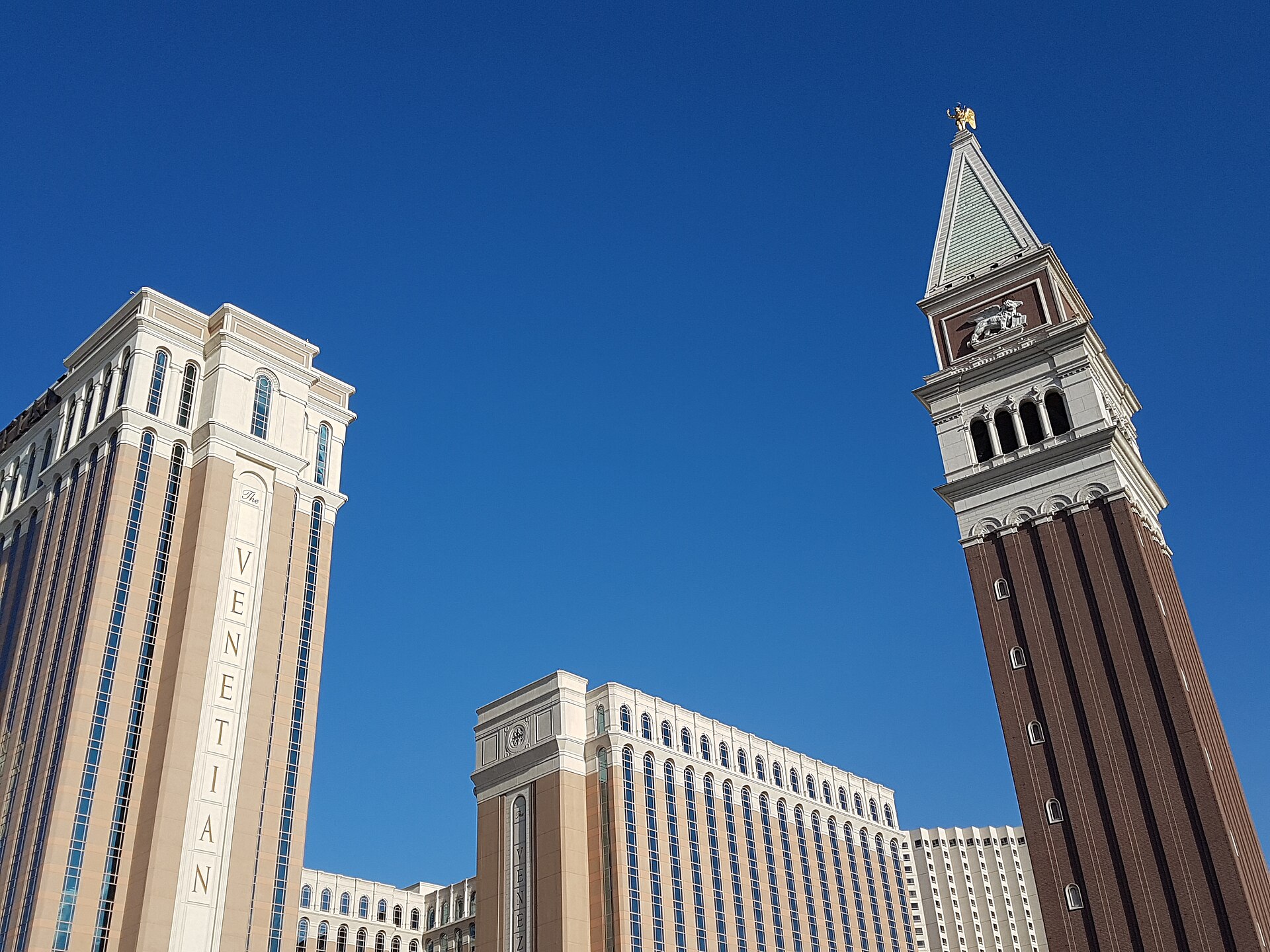
★ Las Vegas comps & deals · UPDATED DAILYWritten by a full-time Las Vegas driver🌐

Author: thecompreport_y1s8a1

  • Who Owns the Las Vegas A’s, and Who’s Paying for the Ballpark?

    Who Owns the Las Vegas A’s, and Who’s Paying for the Ballpark?

    The former Tropicana Las Vegas at night, the site of the Athletics ballpark
    The former Tropicana, demolished in 2024 to make way for the A’s ballpark. Photo: Tristan Surtel / Wikimedia Commons (CC BY-SA 4.0)

    Major League Baseball is coming to the Las Vegas Strip. The Athletics are building a domed ballpark where the Tropicana used to stand, with opening planned for 2028. Here’s who owns the team, what the stadium costs, and how much of it taxpayers are covering.

    Key Takeaways

    • Owner: John Fisher is the A’s majority owner. In July 2026, Harbinger Sports, an Atlanta-based group with Mark Cuban as general partner and president, bought a minority stake ahead of the move.
    • Cost: About $2 billion, according to the team, up from early estimates of $1.5 billion.
    • Public money: Up to $380 million under the Nevada law passed in a June 2023 special session. The rest is private.

    Who Owns the Team

    The Fisher family has controlled the A’s since 2005. John Fisher, an heir to the Gap clothing fortune, moved the team out of Oakland after the 2024 season; it is playing temporarily in West Sacramento until Las Vegas is ready. In October 2024, Fisher pledged that his family would put $1 billion into the stadium.

    New partners are joining. In July 2026, the A’s announced that Harbinger Sports bought a minority stake. Mark Cuban, former majority owner of the Dallas Mavericks, is the group’s general partner and president; other principals include Falcons minority owner Rashaun Williams and former MLB chief financial officer Jonathan Mariner. The deal size wasn’t disclosed. Aramark, which won the ballpark’s 20-year food and drink contract in 2025, also made a financial investment in the team and stadium.

    Who Pays for the Stadium

    SourceAmountHow it works
    Fisher family$1 billion pledgedEquity from the owner
    Construction loanAbout $300 millionU.S. Bank and Goldman Sachs, per the team in 2024
    State tax creditsUp to $180 millionTransferable tax credits issued by Nevada
    Clark County bondsAbout $120 millionRepaid from taxes generated inside a special district around the stadium
    County infrastructure credit$25 millionCovers roads and utilities tied to the project
    Other investors and team moneyThe restMinority partners and team financing; the team covers cost overruns

    Public money is capped at $380 million, and the state’s first-draft bill required the team to pay the first $100 million before public funds could flow. A public stadium authority, the Las Vegas Stadium Authority, owns the ballpark. The A’s sign a 30-year lease and the site is exempt from property tax during that time. Bally’s, which owns the Tropicana site with Gaming and Leisure Properties, is providing 9 of its 35 acres to the team and plans a separate resort next door.

    Where Construction Stands

    • Groundbreaking: June 23, 2025.
    • Spending: About $400 million spent by spring 2026; the team says it’s on time and on budget.
    • Progress: Lower levels done, upper decks rising, and roof trusses going up this summer.
    • Opening: Target completion is February 2028, in time for opening day that season. The stadium will seat about 30,000 to 33,000.

    The Debate

    Supporters say a Strip ballpark adds 81 home dates a year, construction jobs and another reason to visit, paid for mostly with private money and taxes the stadium itself creates. Critics, including teachers’ union-backed Schools Over Stadiums, argued the money belonged elsewhere; the Nevada Supreme Court blocked their effort to put the funding to a public vote in 2024. The bigger question is whether the special tax district raises enough to repay the county bonds without touching the general fund.

    What It Means for Las Vegas

    For visitors, it’s another reason to come midweek in spring and summer, Vegas’s softer months. For locals, expect more traffic at Tropicana and the Strip on game nights, and more jobs in hospitality and security. For drivers like me, a ballpark at Tropicana means steady rides at the south end of the Strip.

    Sources

    For informational purposes only; not financial, investment or legal advice.

  • Lake Mead After Tropical Storm Rachel: All That Rain Raised It About an Inch

    Lake Mead After Tropical Storm Rachel: All That Rain Raised It About an Inch

    Hoover Dam and Black Canyon with bathtub ring
    Hoover Dam and the white “bathtub ring” on the canyon walls, showing how far the water has dropped. Photo: Christian David / Wikimedia Commons (CC BY-SA 4.0)

    Tropical Storm Rachel gave Las Vegas its wettest day in a year, with flooded roads near the Strip and I-15 closed for a time. A lot of people asked me in the car whether all that rain helped Lake Mead. The short answer: barely. The lake rose about an inch.

    Key Takeaways

    • The storm added about 0.1 foot. The Bureau of Reclamation recorded Lake Mead at 1,037.6 feet on Oct. 8 and 1,037.7 feet on Oct. 10 and 11.
    • The lake is only about 26% full and near the lowest level since it first filled in the 1930s.
    • The bigger story is the fight over Colorado River water. Nevada sued the federal government in August over new rules that could cut Southern Nevada’s share by more than 70% in a worst case.

    Why All That Rain Barely Helped

    Almost all of Lake Mead’s water comes from the Colorado River, which starts as snow in the Rocky Mountains of Colorado, Wyoming, Utah and New Mexico, then flows through Lake Powell before it reaches Las Vegas. Rain on the Las Vegas Valley mostly runs into washes, the Las Vegas Wash and local streets. The lake gets only small inflows from places like the Virgin River.

    Utah State University’s Jack Schmidt told KSNV that storms like this help conditions but are only a temporary fix. Refilling the reservoirs depends on a big winter snowpack, and last winter’s was a record low. Colorado State University estimated in March that the Rockies snowpack was 38% of average. Schmidt called several strong wet years in a row a “tough bet.”

    Lake Mead: how low is 1,037.7 feet?Water surface elevation in feet above sea level (not to scale)1,229 ft: full pool (last near 1983)1,075 ft: first federal shortage trigger1,037.7 ft: Oct. 11, 2026, after Rachelabout 26% full; lowest since the lake first filled in the 1930s1,035 ft: older Hoover Dam turbines risk damage950 ft: minimum power pool, no hydropower895 ft: dead pool, water can’t flow past the dam

    How Low Is It?

    Lake Mead fell to 1,040.5 feet on Aug. 7, the lowest since 2022, and kept dropping. Combined storage in Lake Mead and Lake Powell is the lowest since Powell began filling in 1963, according to the Bureau of Reclamation. Lake Powell was about 22% full at the end of August.

    The level matters for power as well as water. At about 1,035 feet, Reclamation expects Hoover Dam’s older turbines to risk serious damage. That’s less than three feet below where the lake sits now. Projections show Hoover’s generating capacity dropping sharply into 2027.

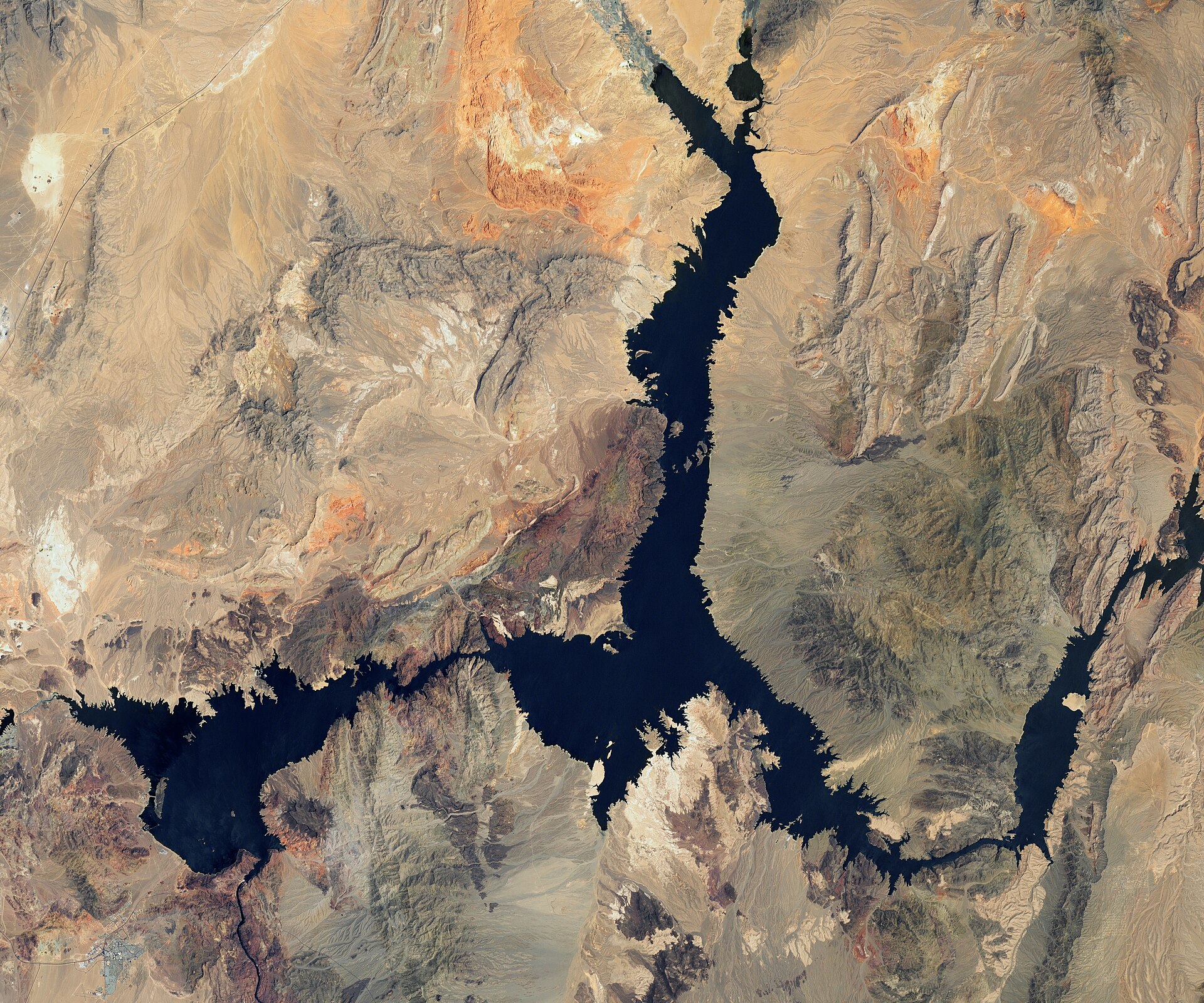
    NASA satellite image of Lake Mead in 2000
    Lake Mead from space in July 2000, near full. Photo: NASA Earth Observatory images by Lauren Dauphin / Wikimedia Commons (Public domain)
    NASA satellite image of Lake Mead in 2022
    The same view in July 2022, with much of the shoreline exposed. The lake is lower today. Photo: NASA Earth Observatory images by Lauren Dauphin / Wikimedia Commons (Public domain)

    What It Means for Las Vegas

    Your tap water is safe for now. The Southern Nevada Water Authority built a deeper “third straw” intake that can draw water even at very low lake levels, and the valley recycles most of the water used indoors. SNWA says Southern Nevada cut its Colorado River use by about 40% over 25 years while adding more than 800,000 residents. “Conservation has its limits,” SNWA general manager John Entsminger said.

    The real risk is policy. Nevada’s share of the Colorado River is 300,000 acre-feet a year, the smallest of the Lower Basin states, and Southern Nevada used about 198,000 acre-feet in 2025. Under the federal record of decision Interior released in August, a worst-case shortage could cut Nevada by up to 213,556 acre-feet. That would leave the valley with less than 86,500 acre-feet a year. Nevada, the Colorado River Commission and SNWA were the first to sue, arguing Interior never studied the hit to Southern Nevada’s $180 billion economy.

    What You Can Do

    • Follow the watering schedule. Fall rules allow landscape watering three days a week, assigned by group.
    • Check rebates. SNWA pays residents to replace grass with desert landscaping.
    • Visiting? Lake Mead National Recreation Area is still open, but several boat launches have closed or moved. Check the National Park Service before you tow a boat out.

    What to Watch Next

    • The Bureau of Reclamation’s monthly 24-month study and what it projects for 2027
    • This winter’s Rocky Mountain snowpack
    • Nevada’s lawsuit against the Interior Department

    Sources

    Elevations from the U.S. Bureau of Reclamation as reported by the sources above. Satellite images: NASA Earth Observatory (public domain); other photos via Wikimedia Commons under the licenses shown.

  • Las Vegas Airport to the Strip (2026): Taxi Flat Rates, Uber & Lyft Pickup, Bus — From a Local Driver

    Las Vegas Airport to the Strip (2026): Taxi Flat Rates, Uber & Lyft Pickup, Bus — From a Local Driver

    Harry Reid International Airport
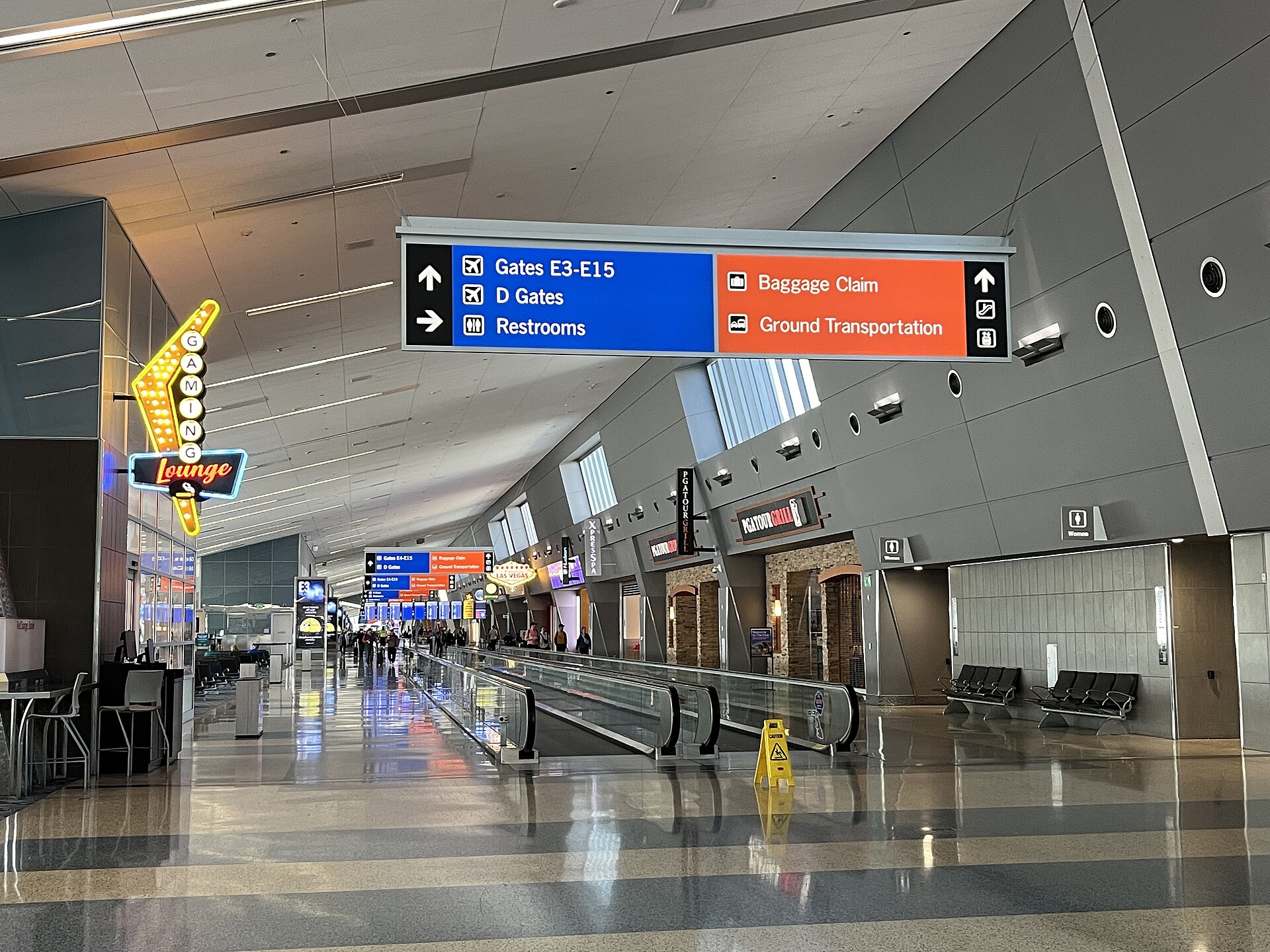
    Harry Reid International Airport is about 10 to 20 minutes from most Strip hotels. Photo: Another Believer / Wikimedia Commons (CC BY-SA 4.0)

    I pick people up at Harry Reid International Airport every day, and the first question is always, “How do I get to my hotel?” Here’s every option, what it costs in 2026, and where to find your ride, so you don’t wander around baggage claim.

    Key Takeaways

    • Taxis have flat rates to the Strip: $22.25 to the south Strip, $26.25 to the center Strip and $30.25 to the north Strip, before fees and tip.
    • Uber and Lyft don’t pick up at the curb. They pick up in the parking garage: Level 2 at Terminal 1 and the Valet Level at Terminal 3.
    • The bus is cheapest but slowest. Routes 108 and the Red Line leave from Terminal 1, Level Zero.

    Option 1: Taxi (Flat Rate to the Strip)

    Taxis line up outside baggage claim: at Terminal 1 on the east side near doors 1 to 4, and at Terminal 3 on Level Zero near door 52. Rides from the airport to the Strip use flat zone fares set by the Nevada Taxicab Authority:

    ZoneArea of the StripFlat fare
    Zone 1South Strip, Sunset Road to Tropicana Avenue (Mandalay Bay, Luxor, Excalibur, MGM Grand area)$22.25
    Zone 2Center Strip, Tropicana to Flamingo Road (Aria, Cosmopolitan, Bellagio, Paris, Caesars area)$26.25
    Zone 3North Strip, Flamingo Road to the Strat (LINQ, Venetian, Wynn, Resorts World, Fontainebleau area)$30.25

    On top of that, expect a $2.40 airport pickup fee, a $3 fee if you pay by card, a fuel surcharge of $1 to $3, 3% tax and a tip. Rides off the Strip, such as downtown, Henderson or Summerlin, go by the meter: $5.50 to start, then about $2.96 a mile.

    Driver tip: say “flat rate to my zone” when you get in. The flat rate is the most you should pay to a Strip hotel.

    Option 2: Uber or Lyft

    Rideshare pickup is inside the parking garages, not at the arrivals curb:

    • Terminal 1 (Southwest, Spirit, Allegiant, Frontier and more): parking garage, Level 2
    • Terminal 3 (most international and some domestic flights): parking garage, Valet Level

    Follow the “Ride Share” signs from baggage claim. Order the ride once you have your bags so your driver isn’t stuck circling. A ride to the Strip is often in the $20 to $35 range at normal times, and more during late-night, big-event and Sunday surges. Check both apps; prices can differ by $10 or more.

    Traveling with a group or a lot of luggage? Uber Black and Lyft Black send a large luxury car or SUV. That’s the service I drive, and it’s often worth it when four people would otherwise split two regular cars.

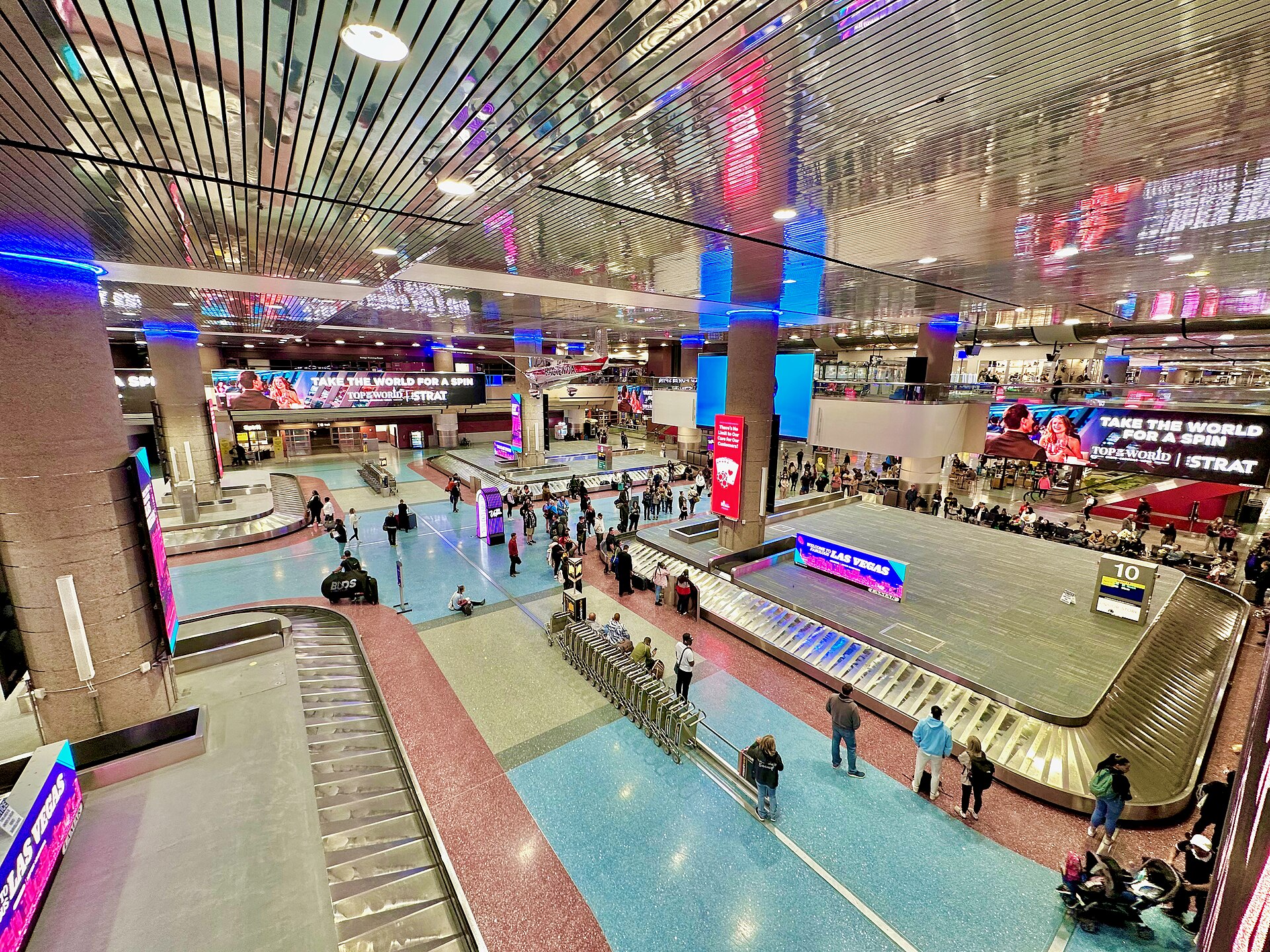
    Baggage claim at Harry Reid International Airport
    Grab your bags first, then order your Uber or Lyft. Photo: Harrison Keely / Wikimedia Commons (CC BY 4.0)

    Option 3: RTC Bus

    Route 108 (Paradise) and the Red Line stop at Terminal 1, Level Zero. Go down from baggage claim, cross the crosswalk and turn right to the covered stop. From Terminal 3, take the free shuttle to Terminal 1 first. Passes start around $6 for two hours or $8 for 24 hours. Most Strip hotels require a transfer to the Deuce on Las Vegas Boulevard, so plan on 30 to 60 minutes.

    Option 4: Shuttles and Private Cars

    Shared shuttle vans run about $15 to $20 per person but stop at several hotels, so the trip can take up to an hour. Pre-booked private town cars and limos usually start around $60.

    Which One Should You Pick?

    • Solo or two people going to the Strip: compare Uber and Lyft with the taxi flat rate; it’s usually close.
    • Three or more with bags: a taxi or a Black car often beats two separate rideshares.
    • Lowest cost and no hurry: the bus.
    • Race weeks and holidays: expect surges and long taxi lines. Lines move faster at Terminal 3.

    Still planning your trip? Compare flights and hotels on our Book a Trip page, and check The Comp Board for hotel deals before you book.

    Sources

    Fares change; the taxi zone fares are minimum estimates from the Nevada Taxicab Authority. Rideshare prices are typical ranges, not quotes. Photos via Wikimedia Commons under the licenses shown.

  • 25 Free Things to Do in Las Vegas (2026): A Local Driver’s List

    25 Free Things to Do in Las Vegas (2026): A Local Driver’s List

    Fountains of Bellagio show
    The Fountains of Bellagio: still the best free show on the Strip. Photo: Hardscarf / Wikimedia Commons (CC BY-SA 4.0)

    Las Vegas can drain a wallet fast, but some of its best moments cost nothing. I drive the Strip every night, and these are the free stops my riders love most, plus a few locals’ secrets. Show times change, so check before you go.

    Key Takeaways

    • Best free show: the Fountains of Bellagio. Shows run every 15 minutes from 8 p.m. to midnight.
    • Best free night out: Fremont Street Experience downtown, with the Viva Vision light canopy and live music stages.
    • Best free photo: the Welcome to Fabulous Las Vegas sign at the south end of the Strip. Go early to skip the line.

    Free on the Strip

    1. Fountains of Bellagio. Water, music and light on the lake in front of Bellagio. Shows run every 30 minutes in the afternoon and every 15 minutes from 8 p.m. to midnight, or until 1 a.m. on Fridays and Saturdays.
    2. Bellagio Conservatory & Botanical Gardens. A giant indoor garden that changes five times a year, open around the clock. Walk next door to the patisserie to see the chocolate fountain.
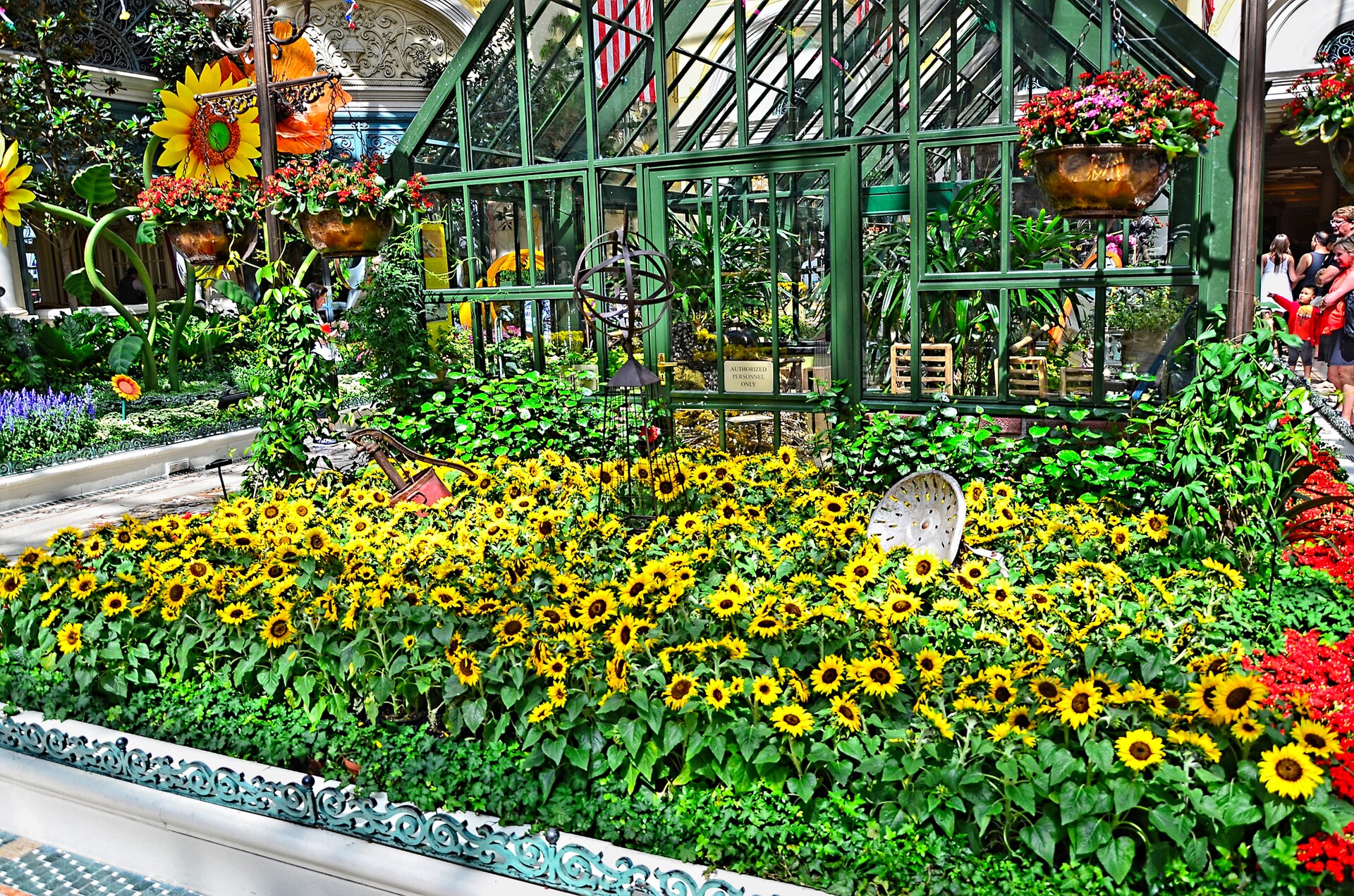
    Bellagio Conservatory and Botanical Gardens
    The Bellagio Conservatory changes its display five times a year. Photo: Tomás Del Coro from Las Vegas, Nevada, USA / Wikimedia Commons (CC BY-SA 2.0)
    1. Welcome to Fabulous Las Vegas sign. The 1959 neon icon at the south end of the Strip has a small parking lot. Early morning has the shortest line.
    2. Flamingo Wildlife Habitat. Chilean flamingos, pelicans, koi and turtles in a garden behind the Flamingo. It’s open roughly 7 a.m. to 8 p.m., with free keeper talks.
    3. Lake of Dreams at Wynn. A light-and-music show over a lake and waterfall, every 30 minutes at night.
    4. Circus acts at Circus Circus. Acrobats and jugglers perform on the Midway stage on the second floor throughout the day.
    5. The Atlantis show at the Forum Shops. An animatronic show inside Caesars Palace, usually on the hour from noon. It’s usually dark on Tuesdays and Wednesdays.
    6. Eiffel Tower light show. Paris Las Vegas lights up its tower every 30 minutes from sunset to midnight. Watch it from across the street at Bellagio.
    7. Miracle Mile rainstorm. An indoor “rainstorm” every half hour inside the Miracle Mile Shops at Planet Hollywood.
    8. LINQ Promenade. Street performers, live music and a light show at the foot of the High Roller.
    9. M&M’s World and the Coca-Cola Store. Both are free to walk through, next to MGM Grand.
    10. The Sphere. You don’t need a ticket to see the giant LED exterior light up after dark. The best views are from the Wynn and Venetian side.
    11. Free trams. Trams connect Aria, Bellagio and Vdara, and Mandalay Bay, Luxor and Excalibur, which saves your feet in the heat.
    Flamingo Wildlife Habitat
    Flamingos, pelicans and koi live behind the Flamingo hotel. Photo: Tomás Del Coro / Wikimedia Commons (CC BY-SA 2.0)

    Free Downtown

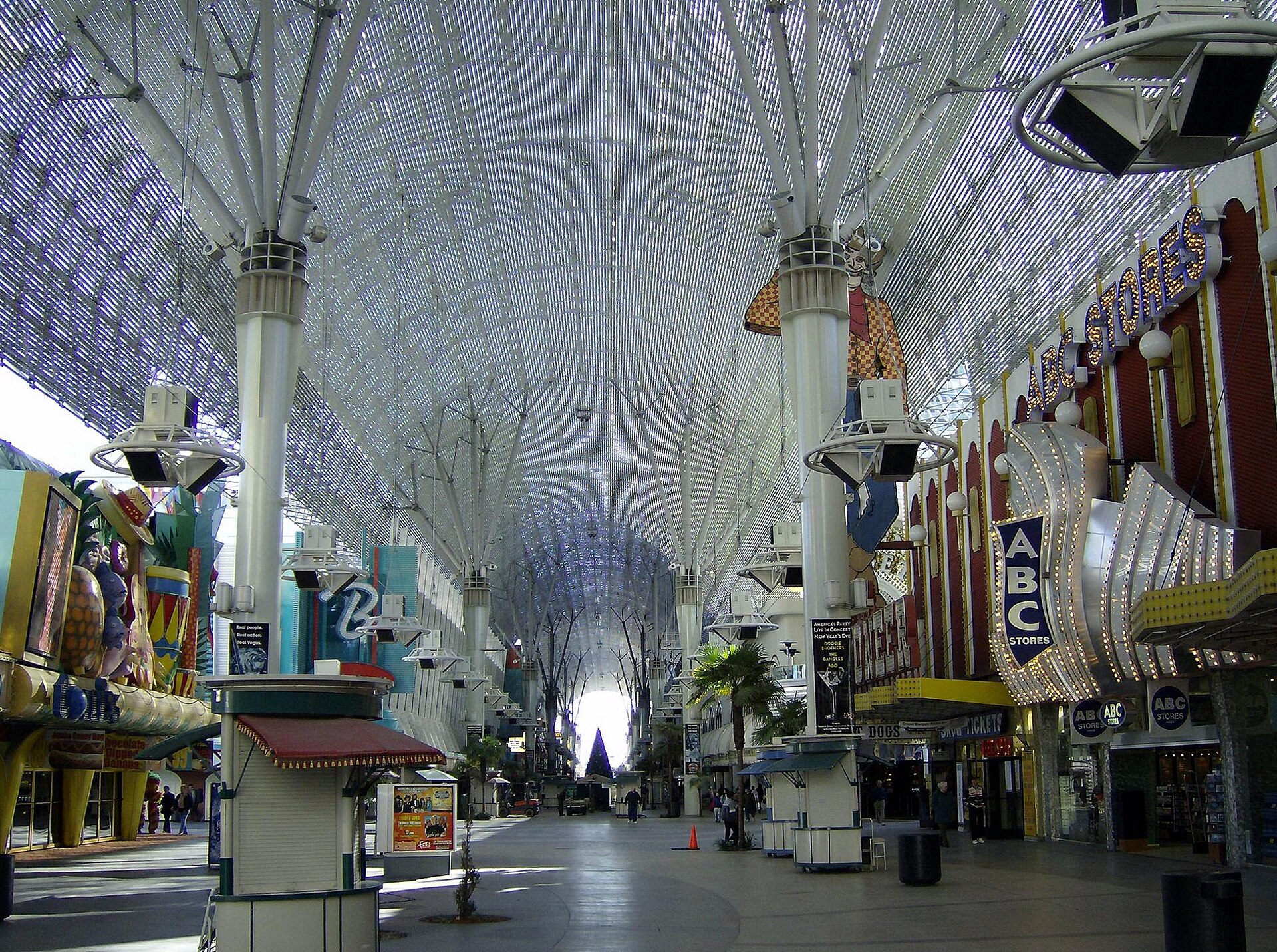
    Fremont Street Experience canopy
    The Viva Vision canopy over Fremont Street. Photo: [2] / Wikimedia Commons (CC BY-SA 3.0)
    1. Fremont Street Experience. The Viva Vision light show plays on a five-block canopy every hour at night, with free concerts on three stages.
    2. Golden Nugget’s Hand of Faith and The Tank. See a 61-pound gold nugget in the lobby, then watch sharks through the glass of the pool’s aquarium.
    3. Downtown Container Park. Shops and a playground built from shipping containers, with a fire-breathing praying mantis out front.
    4. Arts District murals. Walk the 18b Arts District for murals, including the “Greetings from Las Vegas” wall at Main Street and Colorado Avenue.

    Free Off the Strip

    1. Seven Magic Mountains. Seven stacked towers of neon-colored boulders in the desert, about 25 minutes south of the Strip off I-15. Go at sunrise or sunset.
    Seven Magic Mountains
    Seven Magic Mountains, south of Las Vegas off I-15. Photo: planeta / Wikimedia Commons (CC BY-SA 2.0)
    1. Ethel M Chocolates and Cactus Garden. Watch the chocolate being made, then walk a three-acre cactus garden in Henderson. It’s lit up for the holidays.
    2. Pinball Hall of Fame. Free to enter, near the south end of the Strip. Most games cost 25 to 50 cents.
    3. AREA15. Walking into the immersive art complex is free. Reserve a free entry pass online.
    4. Pawn Stars shop. The Gold & Silver Pawn Shop from the TV show is free to visit, roughly 10 a.m. to 5:30 p.m.
    5. Clark County Wetlands Park. Free trails, birds and a nature center on the east side of the valley.
    6. Hoover Dam. Walking the dam and the bypass bridge is free. Parking and tours cost extra.
    7. Calico Basin. The fee-free edge of Red Rock Canyon, with a boardwalk and short hikes to red sandstone.

    The Driver’s Tips

    • Plan a free night: Bellagio fountains, then the Conservatory, then walk to the Flamingo habitat and the LINQ Promenade. It’s all within about a mile.
    • Downtown is cheaper. After Fremont Street, check our food deals for $4 happy hours a block away.
    • Want a paid tour too? See our Tours & Things To Do page for the Grand Canyon, helicopter rides and Hoover Dam tours.
    • Getting around: the Strip looks walkable, but it’s four miles long. Use the free trams, or ask your driver for the fastest drop-off spot.

    Sources

    Hours and show schedules change. Check with each venue before you go. Photos via Wikimedia Commons under the licenses shown.

  • LA-to-Vegas High-Speed Rail Update: Where Brightline West Stands, and Why I-15 Is Still a Parking Lot

    LA-to-Vegas High-Speed Rail Update: Where Brightline West Stands, and Why I-15 Is Still a Parking Lot

    Interstate 15 crossing the Mojave Desert between Las Vegas and Southern California
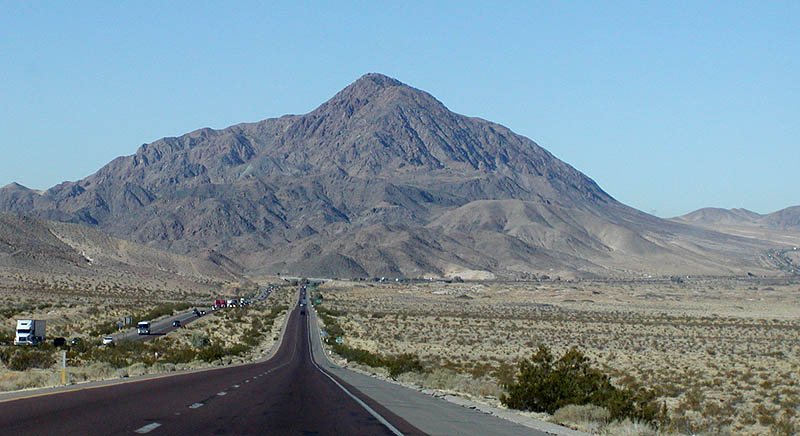
    I-15 through the Mojave, the only freeway between Las Vegas and Southern California. Photo: Ken Lund from Reno, Nevada, USA / Wikimedia Commons (CC BY-SA 2.0)

    Anyone who has driven home to Southern California on a Sunday afternoon knows the feeling: you leave the Strip in good time and then sit in traffic from Primm to the state line. For years, the answer has been a 200-mph train. Here is where that train really stands as of October 2026, and why I-15 in California is still so jammed.

    Key Takeaways

    • The train is late and more expensive. Brightline West now targets late 2029, after missing the goal of opening for the 2028 Olympics in Los Angeles. Its estimated cost has jumped from about $12 billion to about $21 billion.
    • The next two months are critical. The company is waiting on a $6 billion federal loan and has until Nov. 2 to raise $400 million in equity, a deadline that has already been pushed back twice.
    • Don’t count on more lanes in California. I-15 drops from three lanes to two after the state line. In September 2026, Caltrans said it “has shifted away from widening highways,” while Nevada is planning more lanes on its side.

    The Train: What Brightline West Is Building

    Siemens Velaro Novo high-speed train
    A Siemens Velaro Novo high-speed train. Brightline West plans to use trains from the same Siemens family. Photo: Kevin Prince / Wikimedia Commons (CC BY-SA 2.0)

    Brightline West is a 218-mile, all-electric line that runs mostly in the median of I-15. Trains would top out near 200 mph, and the trip would take about two hours and 10 minutes. Planned stations:

    • Las Vegas: on Las Vegas Boulevard south of the Strip, across from the Las Vegas South Premium Outlets
    • Victor Valley (Apple Valley) and Hesperia
    • Rancho Cucamonga: where riders can transfer to Metrolink for Los Angeles

    Note that the train does not go all the way to downtown L.A. Riders heading there will need to transfer to Metrolink at Rancho Cucamonga.

    Las Vegas to Southern California: I-15 and Brightline WestSchematic, not to scale. Planned stations in gold.Los AngelesRancho CucamongaMetrolink transferCajon PassHesperiaVictor ValleyBarstowMountain PassPrimm / state lineLas VegasI-15 southbound: 3 lanes in Nevada2 lanes most of the way to Barstow218 miles · up to ~200 mph · about 2h10m by train · target late 2029

    Where the Money Stands

    The project has a $3 billion federal grant awarded in 2023 and about $3.5 billion in tax-exempt private activity bonds approved by the U.S. Department of Transportation. That is not enough to cover a price tag that the company’s January 2026 financial disclosure put at roughly $21 billion.

    The gap is supposed to be filled by a $6 billion low-interest federal loan. Brightline applied in October 2025 and originally expected an answer by early 2026. According to The Bond Buyer, the company now expects the federal Build America Bureau to finish its due diligence in October 2026, followed by a 90-day review. Separately, Brightline West must raise $400 million in equity by Nov. 2. That money was first promised by March 31, then by Sept. 10. Bondholders have agreed to five amended deals to keep the project moving, and its 12% bonds were trading around 61.5 cents on the dollar in late August.

    The company says construction contracts are signed and the remaining budget is about $20.9 billion. In Las Vegas, a parking garage near the station site was nearly finished this spring, but station construction had not started as of March. The project is owned by Fortress Investment Group, which also owns Brightline’s Florida line. That line is going through a financial restructuring.

    Why I-15 Jams Up in California

    Interstate 15 near Cave Mountain, California
    I-15 near Cave Mountain between Barstow and Baker. Much of the California desert stretch is two lanes each way. Photo: Wikimedia Commons / Wikimedia Commons (CC BY-SA 3.0)

    1. Three lanes become two. Southbound I-15 has three lanes through Nevada. After the state line, it narrows to two lanes for most of the roughly 113 miles to Barstow. “The issues lie when you cross into California and the lanes squeeze down,” NDOT spokesman Tony Illia told KSNV.

    2. Everyone leaves on Sunday. Most Southern Californians drive in on Friday and drive home on Sunday, so the busiest traffic hits the narrowest stretch at once. About 11 million Las Vegas visitors use the corridor every year, and holiday backups have stretched 18 miles.

    3. The third lane never fully arrived. In December 2021, California promised a third southbound lane near the state line. What drivers got was a one-mile transition lane and a part-time shoulder lane that opens on Sundays and Mondays from 10 a.m. to 8 p.m. Caltrans says it saves 30 to 40 minutes on regular Sundays and Mondays. In September 2026, Caltrans District 8 said it is not pursuing more widening and “has shifted away from widening highways.”

    4. Trucks, grades and weather. I-15 is also a major freight route, and trucks slow down on the long climbs at Mountain Pass and the Cajon Pass. Crashes and winter snow on the Cajon Pass can shut down the whole route because there is no good alternative.

    5. Construction in the Inland Empire. Closer to L.A., San Bernardino County is building toll express lanes on about 11 miles of I-15 from near the Riverside County line to Foothill Boulevard. The $390 million project is expected to finish in July 2028, and lane shifts in the meantime slow traffic through Ontario, Rancho Cucamonga and Fontana.

    What Nevada Is Doing

    NDOT has proposed a 15-year plan for I-15 from the state line toward Las Vegas. It includes added lanes, new interchanges at Primm and Sloan, and more truck parking at weigh stations. Public comments closed Sept. 30. Las Vegas has pushed for years for California to widen its side. The city once estimated that congestion on the drive costs the region about $3 billion a year in lost visits and late deliveries.

    The Driver’s Tips

    • Leave before 10 a.m. or after 8 p.m. on Sunday. Midday Sunday is the worst time to drive.
    • Stay until Monday if you can. Sunday hotel rates are often the cheapest of the week, and the drive is much better. Check The Comp Board for midweek deals.
    • Fly instead. Southwest, Spirit and Frontier run many short flights from LAX, Burbank, Ontario and Long Beach. You can compare prices on our Book a Trip page.
    • Check Caltrans QuickMap or NDOT’s traffic map before you leave Primm.

    What to Watch Next

    • Whether the $6 billion federal loan moves forward this fall
    • Whether Brightline West meets the Nov. 2 equity deadline or gets another extension
    • Whether station construction finally begins in Las Vegas

    Sources

    For informational purposes only; not financial or investment advice. Photos via Wikimedia Commons under the licenses shown.

  • Who Pays for the Las Vegas Grand Prix? The Money Behind F1

    Who Pays for the Las Vegas Grand Prix? The Money Behind F1

    Every fall, the Las Vegas Strip turns into a Formula 1 racetrack for one weekend. Getting it ready takes months of lane closures around Koval, Sands, Harmon and Flamingo. Here’s who owns the race, who pays for it, what it brings in, and whether that trade-off is worth it.

    Key Takeaways

    • Formula 1’s owner, Liberty Media, runs the Las Vegas Grand Prix itself. Most F1 races use a local promoter, but in Vegas F1 bought 39 acres off the Strip for about $240 million and built its own pit and paddock.
    • On May 19, 2026, the Clark County Commission voted unanimously to make the race an annual event through 2037. This year’s race weekend is Nov. 19–21.
    • Organizers say the race brought in about $1.5 billion in 2023 and $934 million in 2024. The county’s own accounting of the first race showed a small net loss for county government, and some economists question the headline numbers.

    How the Money Works

    F1 is the promoter. At most Grand Prix, a local promoter pays F1 a hosting fee and keeps the ticket money. In Las Vegas, Liberty Media cut out the middleman. It bought the land on Harmon Avenue and Koval Lane, built the permanent pit building, and keeps the ticket, hospitality and sponsorship revenue. Before the first race, F1 told investors it expected to spend at least $500 million in total on the land and circuit. Caesars, MGM Resorts and Wynn signed on as partners.

    Public money is involved too. The Las Vegas Convention and Visitors Authority, which is funded by hotel room taxes, paid $6.5 million a year for 2023 through 2025. In August 2025 it approved $10 million a year for the 2026 and 2027 races, covering marketing plus Strip employee transportation and tickets.

    The paving fight. In June 2023, F1 asked Clark County to cover $40 million of an $80 million road project for the circuit. Commissioners voted 4–3 only to open negotiations. F1 later dropped the bill “as a show of good faith,” according to Casino.org.

    The county’s own math. For the 2023 race, Clark County reported collecting about $3.8 million in taxes against $4.4 million in staff time, a net loss of roughly $463,000. Then-chairman Tick Segerblom said, “At the end of the day, it was a net loss.”

    The Race Route

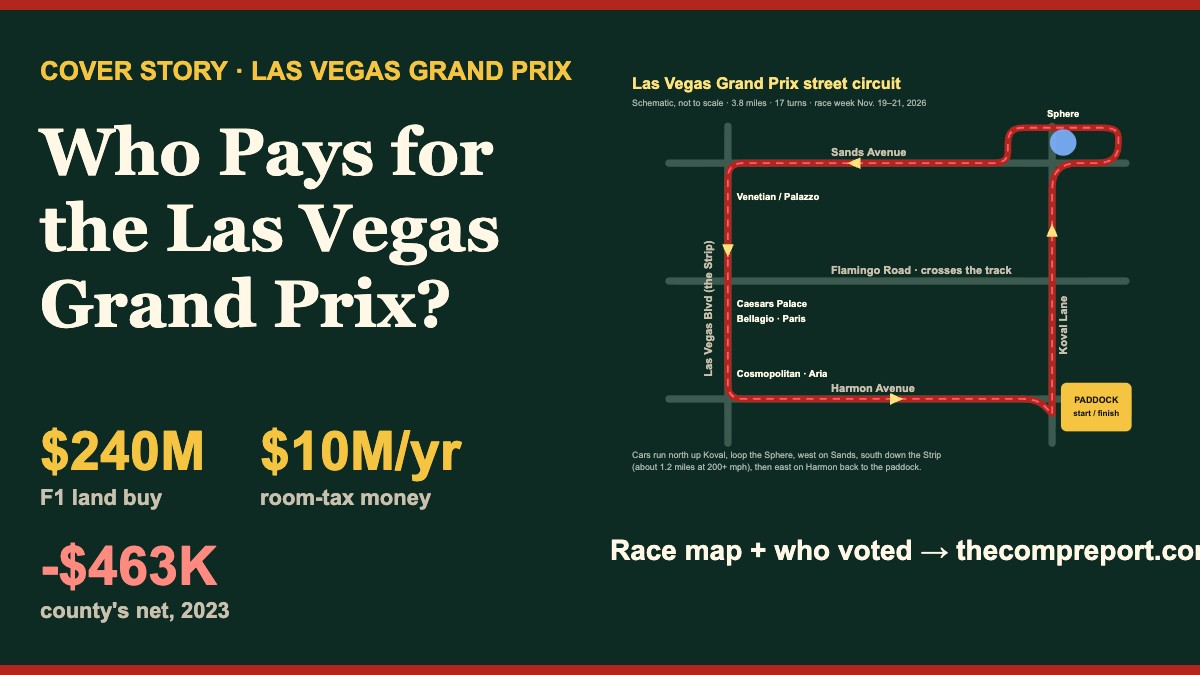
    Las Vegas Grand Prix street circuitSchematic, not to scale · 3.8 miles · 17 turns · race week Nov. 19–21, 2026PADDOCKstart / finishSphereVenetian / PalazzoCaesars PalaceBellagio · ParisCosmopolitan · AriaLas Vegas Blvd (the Strip)Koval LaneSands AvenueFlamingo Road · crosses the trackHarmon AvenueCars run north up Koval, loop the Sphere, west on Sands, south down the Strip(about 1.2 miles at 200+ mph), then east on Harmon back to the paddock.

    The 3.8-mile, 17-turn circuit starts at the paddock at Harmon and Koval, runs north up Koval Lane, wraps around the Sphere, heads west on Sands Avenue, then turns south for a roughly 1.2-mile blast down Las Vegas Boulevard past the Venetian, Caesars Palace and Bellagio before turning east on Harmon. Flamingo Road crosses the circuit twice, which is why Flamingo traffic gets squeezed for weeks. For live closure updates, check transportation.f1lasvegasgp.com or text F1LV to 31996.

    Is 3 Months of Construction Worth One Weekend?

    The case for it: Applied Analysis, the firm hired to measure the race, put its economic impact at about $1.5 billion in 2023 and $934 million in 2024. That includes $77 million and $45 million in state and local taxes. Attendance topped 300,000 both years, and the race airs to tens of millions of viewers worldwide during what used to be one of the slowest weeks of the year.

    The case against it: Prep now starts in September. Track installation and removal now spans about 17 weeks, and lane closures hit Koval, Sands, Harmon and Flamingo along the way. Small businesses near the circuit sued the county and F1 over lost access, a case F1 later settled. Berry College economist Frank Stephenson argued that hotel gains on race weekend were mostly offset by weaker nights earlier in the week. The 2024 numbers also fell sharply from 2023, with average spending per F1 visitor dropping from about $4,100 to about $2,400.

    The driver’s view: From behind the wheel, race season means detours, closed turns and longer trips for weeks, followed by one of the busiest and best-paying weekends of the year. Locals carry most of the inconvenience; casinos and F1 collect most of the upside.

    The Clark County Leaders Who Approved It

    The race runs on county roads, so the Clark County Commission signs off on it. On May 19, 2026, the commission voted unanimously, after about two minutes of discussion, to keep the race on the Strip every year through 2037. Chairman Michael Naft said, “The Grand Prix needs to condense the timeline,” and pushed for a shorter construction window. The current commission:

    DistrictCommissionerRole
    AMichael NaftChair
    BMarilyn Kirkpatrick
    CApril Becker
    DWilliam McCurdy IIVice Chair
    ETick Segerblom
    FJustin Jones
    GJim Gibson

    Want to weigh in on road closures? Clark County Commission meetings are public, and each commissioner’s office takes calls from constituents.

    What to Watch Next

    • Whether F1 delivers on Naft’s call to shorten the setup and teardown window.
    • Official economic impact numbers for the 2025 and 2026 races.
    • How much LVCVA room-tax money goes to the race after the current deal ends in 2027.

    Sources

    For informational purposes only; not financial, investment or legal advice. Map is a simplified schematic; check official closure maps before driving.
  • Late-Night Hibachi Truck in Las Vegas: A Driver’s Stop

    Late-Night Hibachi Truck in Las Vegas: A Driver’s Stop

    Driving nights in Vegas means eating at strange hours. When the clubs let out and the rides slow down, a lot of drivers I know head for the food trucks parked in lots across town. Tonight’s stop: Hibachi Time LV, a hibachi truck cooking on the flat-top well after dark.

    The Stop

    • What: Hibachi Time LV, a Japanese-style hibachi food truck
    • When: Late night. Online listings show the truck serving into the early morning hours.
    • Where: Food trucks move. Online listings put it at 3616 Spring Mountain Rd, but call before you drive over.
    • Call: (702) 883-8372. The truck also advertises private catering.

    What’s on the Grill

    It’s hibachi plates cooked to order: chicken, steak, shrimp and filet combos with the sauces you’d expect. Online reviews praise the friendly crew and made-to-order food, while some say quality varies from night to night. It’s a late-night truck, not a sit-down teppanyaki show, and prices run like a casual dinner, not fast food. Check the current menu when you call.

    Driver’s Tip

    If you’re a visitor, a ride from the Strip to Spring Mountain Road is short. Spring Mountain is also Chinatown, so if the truck has moved, you’re surrounded by late-night food anyway. If you’re a local, save the number. Plenty of us live on late-night food between rides.

    More cheap eats and happy hours are on our Restaurant Deals board, updated daily.

    Sources

    Hours, location and prices for food trucks change often. Call ahead before you go.

  • Vegas Matt’s Venetian Ban: What Happened and Why It Matters

    Vegas Matt’s Venetian Ban: What Happened and Why It Matters

    The Venetian Las Vegas
    The Venetian on the Las Vegas Strip. Photo: Andrew and Annemarie / Wikimedia Commons (CC BY-SA 2.0)

    Vegas Matt, the slots YouTuber with more than 1.6 million subscribers, says The Venetian Las Vegas had security walk him off the property a few days after his group hit roughly $400,000 on a Phoenix Link machine there. The casino has not said why. Here is what we know, what “advantage play” means, and what it tells every regular player about how Strip casinos treat big winners.

    Key Takeaways

    • Stephen Matt Morrow, known as Vegas Matt, confirmed in late August 2026 that Venetian security escorted him out after a roughly $400K slot session. The ejection itself happened months earlier and only came out when the Vital Vegas blog reported it on August 25.
    • The rumored reason is “advantage play” on a must-hit-by machine. Morrow denies it, saying his group left the machine’s counter higher than they found it. The Venetian has not commented publicly, and it is not clear whether he is permanently banned.
    • Since then, Morrow has posted a $260,000 win at Fontainebleau, threatened a defamation suit against a gambling-recovery YouTuber, and news has surfaced that his story is being developed into a movie.

    What’s Happening

    Morrow is one of the biggest gambling creators in the world. His channel is built on high-limit slot sessions, mostly filmed downtown at El Cortez, and he is a paid ambassador for FanDuel Casino. According to Casino.org, he posted on X on August 25 that Venetian security walked him out after the session. He wrote that his crew “left the counter higher than when we started, which is hardly advantage play,” and added: “Maybe they just didn’t like me winning.”

    Security did not give him an official reason, and the Venetian has not issued a public statement. Several outlets, including PokerNews and Card Player, picked up the story, and some of his followers said they cancelled upcoming Venetian reservations.

    The same day the story broke, Morrow posted a video of a $260,000 session at Fontainebleau Las Vegas, including a $200,000 Grand jackpot on another Phoenix Link machine, and said he prefers properties that are “happy when I win.”

    What Is Advantage Play on a Slot?

    Some slot machines bank progress toward a bonus as people play, and that progress stays on the machine after a player walks away. Phoenix Link has a “must hit by” style feature. A player who knows the math can look for a machine someone else left close to its trigger and play it at better-than-normal odds. That is not cheating: no devices, no hacking, just knowing how the game works. It is generally considered legal.

    Casinos still hate it. Regulars call these players “slot vultures,” and private casinos in Nevada, like most businesses, have wide latitude to refuse service and ask someone to leave without citing a specific rule. Casinos.com, which reviewed the incident, pointed out that Morrow’s claim about leaving the counter higher would undercut the advantage-play explanation, if accurate.

    The Other Vegas Matt Headlines

    • Legal fight with a recovery YouTuber. Casino.org reports that Morrow’s attorney sent a 17-page demand letter dated August 17 to Rob Minnick (“Rob ODAAT”), who runs a gambling-recovery channel. Minnick had posted a video critical of gambling influencers with a “FAKE GAMBLER” thumbnail. Minnick refused to take it down and posted the letter publicly.
    • A movie. In late September, the Miles to Memories Vegas news roundup reported that Morrow’s story is being developed into a Hollywood movie. No studio, title or release date has been announced.

    What It Means for Las Vegas Players

    You do not need to be a YouTube star for this to matter. If you play a lot and win a lot, a casino can stop taking your action. Locals who play persistent-state machines should know the house is watching those games closely. Treasure Island just expanded its partnership with OPTX, an AI-driven casino operations system that, according to Card Player, can be used to flag advantage players. For regular visitors, the bigger takeaway is simpler: rewards perks and play are at the casino’s discretion, so read the terms, keep your receipts and players-club statements, and don’t treat any one property as guaranteed.

    It is also a reminder of how much power Las Vegas gambling creators now have. One post from Morrow can move reservations, and casinos know it. Downtown properties like El Cortez have leaned into creator traffic, while some Strip resorts clearly prefer to keep cameras and big winners at arm’s length.

    What to Watch Next

    • Whether the Venetian comments or lifts the ban.
    • Whether Morrow’s demand letter turns into an actual lawsuit.
    • Details on the Vegas Matt movie: studio, cast and timing.
    • Whether other Strip properties follow with their own creator restrictions.

    Follow our new Creator News section for more on Vegas Matt, Bluff and the other Las Vegas gambling creators.

    Sources

    For informational purposes only; not financial, investment or legal advice. Must be 21+ to gamble. Gambling problem? Call 1-800-GAMBLER.

  • 5 Las Vegas Freebies: Free Play, Free Food, Free Breakfast

    5 Las Vegas Freebies: Free Play, Free Food, Free Breakfast

    Fremont Street Experience canopy in downtown Las Vegas
    Downtown’s Fremont Street Experience, home to Circa, The D and Golden Gate. Photo: [2] / Wikimedia Commons (CC BY-SA 3.0)

    Yolonda, our AI host, walks through the list in 70 seconds.

    Free things in Las Vegas still exist. They just come with a sign-up form or a booking code. These five are the easiest to claim right now, whether you’re landing tomorrow or already here.

    5. Virgin Hotels: $25 Free Slot Play

    Join Cherry Rewards and earn 250 base points within 24 hours of signing up, and Virgin Hotels Las Vegas adds $25 in free slot play. The offer runs through December 31 for new members.

    4. Flamingo & The LINQ: $50 a Day for Food and Drinks

    Book the food-and-beverage credit package at Flamingo or The LINQ and you get a $50 credit for every day of your stay. It works at restaurants, bars and lounges across all eight Caesars resorts on the Strip, not just the hotel you book.

    3. Caesars Palace, Paris and The Vanderpump Hotel: Free Breakfast for Two

    Book the breakfast package and get daily breakfast for two: Brasserie B at Caesars Palace, Dominique Ansel Marché at Paris, or GIADA at The Vanderpump Hotel. The packages are bookable through December 2027.

    2. Fontainebleau Rewards: $10 Free Play + $50 Dining Credit

    New Fontainebleau Rewards members get $10 in free slot play just for joining. Earn 250 Play Points within 72 hours and they add a $50 food and drink credit.

    1. Circa, The D & Golden Gate: $50 for Your Boarding Pass

    Flying in? Show your airline boarding pass at the Club One desk at Circa, The D or Golden Gate within 24 hours of landing and get $50 in match play. It’s one of the easiest freebies in town, and all three are a short walk apart downtown.

    Before You Go

    • Free play and match play usually have to be played through once and can’t be cashed out directly.
    • Most offers require a players card, and many need a physical ID.
    • One offer per person is the norm; read the fine print.

    Every current freebie and comp is on The Comp Board.

    Sources

    Promotions change often and can end early. Confirm terms, dates and eligibility with the property before you go. Must be 21+ to gamble. Gambling problem? Call 1-800-GAMBLER.

  • Las Vegas Locals Only: 5 Deals for Nevada Residents

    Las Vegas Locals Only: 5 Deals for Nevada Residents

    Red Rock Resort in Summerlin, Las Vegas
    Red Rock Resort, a Station Casinos locals favorite in Summerlin. Photo: nexxtpress.de / Wikimedia Commons (CC BY-SA 2.0)

    Yolonda, our AI host, walks through the list in 70 seconds.

    Visitors get the billboards, but locals get some of the best deals in town, if you know where to look and remember your Nevada ID. Here are the five locals offers we like most right now.

    5. Station Casinos: Free VGK Puffer Jacket (Oct. 16)

    Station Casinos is running a Golden Knights puffer jacket gift day on Friday, October 16. Earn 300 base points the same day, then bring your Boarding Pass card and a physical ID to claim it. It’s while supplies last, so go early.

    4. Boyd Gaming: 10X Points for 50+ on Tuesdays

    Boyd’s Young at Heart Tuesdays give B Connected members 50 and older multiplied points on slots. Sapphire tier and up get the unlimited 10X multiplier. If you already play at a Boyd property, Tuesday is your day.

    3. Palms: Up to 20% Off for Locals

    Palms runs a separate locals offer of up to 20% off rooms this fall, on top of its public “Let’s Get Cozy” package. It’s a solid staycation pick just off the Strip.

    2. M Resort: Up to 30% Off, No Resort Fee

    M Resort’s Nevada resident offer is up to 30% off rooms with no resort fee. Arizona and California residents have their own offers, but this one is for locals.

    1. Fontainebleau: Skip the Resort Fee

    Fontainebleau’s locals rate, code 26LOC, waives the resort fee. You’ll need a free Fontainebleau Rewards membership and your Nevada ID at check-in. Book by October 31.

    Locals Tips

    • Always bring your Nevada ID. Most locals rates are verified at check-in.
    • Sign up for every free rewards card. Locals mailers and free play offers often follow.
    • Ask about locals parking. Several Strip resorts still waive parking for Nevada residents.

    More locals deals are on The Comp Board. Tap the “Locals” filter.

    Sources

    Promotions change often and can end early. Confirm terms, dates and eligibility with the property before you go. Must be 21+ to gamble. Gambling problem? Call 1-800-GAMBLER.